Off-Platform Communication
Drivers share real-time road intelligence through informal channels, text chains, group chats, voice calls, that Uber cannot see or act on.
8 of 12 drivers used off-platform networks
Research, synthesis, and conversational AI design for FIFA World Cup 2026 and other surge moments when reliability and trust matter most.
"Sometimes the Uber app picks it up and sometimes it doesn't. I don't know how well they coordinate with the police shutting down streets, more times than not, they don't."
P1, Uber Driver, Seattle
This matters now. The 2026 FIFA World Cup is coming to the United States, and the scale is hard to overstate.
With millions of fans unfamiliar with host cities, Uber has a significant opportunity to become the default way to get around. But only if the driver experience holds up under pressure.
We didn't start with a survey. We started where drivers actually work.
Platform goals, business priorities, internal data
On-the-ground experience, pain points, workarounds
Venue logistics, crowd flow, road closures
How other systems handle surge, coordination gaps
Our research centered drivers, but understanding the full ecosystem shaped how we framed the problem and where we drew design boundaries.
Accompanied drivers on event-day trips in Seattle. Observed navigation decisions, passenger interactions, and staging strategies in real time.
Remote and in-person interviews across three cities exploring mental models, coping strategies, and event-day pain points.
Visited known staging and pickup spots near venues. Documented spatial patterns and informal driver coordination.
Analyzed screenshots from driver group chats, forum posts, and personal note systems, the invisible knowledge networks.
Before speaking with a single driver, we reviewed Uber driver app store reviews, Reddit communities (r/uberdrivers), competitor pickup flows across 7 platforms (Lyft, Waymo, Lime, Shuttle, Gett, Curb), and 5 academic and industry sources on large-event transportation logistics. This grounded our interview protocol in real patterns, not assumptions.
Drivers share real-time road intelligence through informal channels, text chains, group chats, voice calls, that Uber cannot see or act on.
8 of 12 drivers used off-platform networks
Veteran drivers develop mental maps of secret staging locations, optimal pickup routes, and positioning strategies built over years of experience.
100% of veteran drivers had spot strategies
The pickup moment during events is the highest-friction point. Drivers and riders struggle with location accuracy, crowd density, and unclear meeting points.
Avg. 3x longer pickup during events vs. normal
"The app tells you to go to the designated zone. But you'd be stuck there for 20 minutes. Experienced drivers know to wait 2 blocks over."
P4, Veteran Uber Driver
Reach pickup more efficiently, offload misinformation on reroutes
Hands-free comms, crowdsourced reroutes, reduces info overload for drivers and Uber
Directly addresses Ghost Frequencies and Match Point Stress. Voice-first removes the 'glance at screen' constraint. Can scale to non-English speakers.
Find passenger efficiently, reduce back-and-forth communication
Hands-free proximity alerts, customizable radius
Solves a narrower slice of the problem. Haptic hardware variation across devices creates reliability risk.
Data-informed decisions about when to make trips, demand transparency
Increased earnings through demand forecasting, density maps
Valuable but addresses pre-trip planning, not the in-event communication breakdown.
A conversational AI layer inside the Uber Driver app designed for hands-free, real-time communication during large-scale events.
A voice-activated assistant that communicates road closures and reroutes hands-free. Drivers interact through speech, keeping eyes on the road and hands on the wheel.
Drivers told us they can't look at screens during events. Ghost Frequencies showed they already call each other for this information. We formalized that behavior into the platform.
Drivers can crowdsource real-time roadblock reports through the voice interface. Reports are validated by the platform and surfaced to other drivers in the area.
Drivers have been offloading Uber's update burden for years through Facebook groups. This brings that behavior into the app with quality controls and trust signals.
Every voice interaction generates a readable transcript. Multilingual support ensures drivers who don't speak English natively can access the same information.
Match Point Stress research surfaced that language barriers between drivers and riders (and drivers and the platform) compounded pickup friction. Transcripts give drivers a fallback they can verify.
The most surprising finding was that drivers had already built a better system than Uber had, they just built it outside the app. The design challenge wasn't to invent new behavior. It was to earn enough trust to bring existing behavior onto the platform.
RoadRaise is in active design refinement ahead of driver concept testing.
UX Designer · June 20, 2025
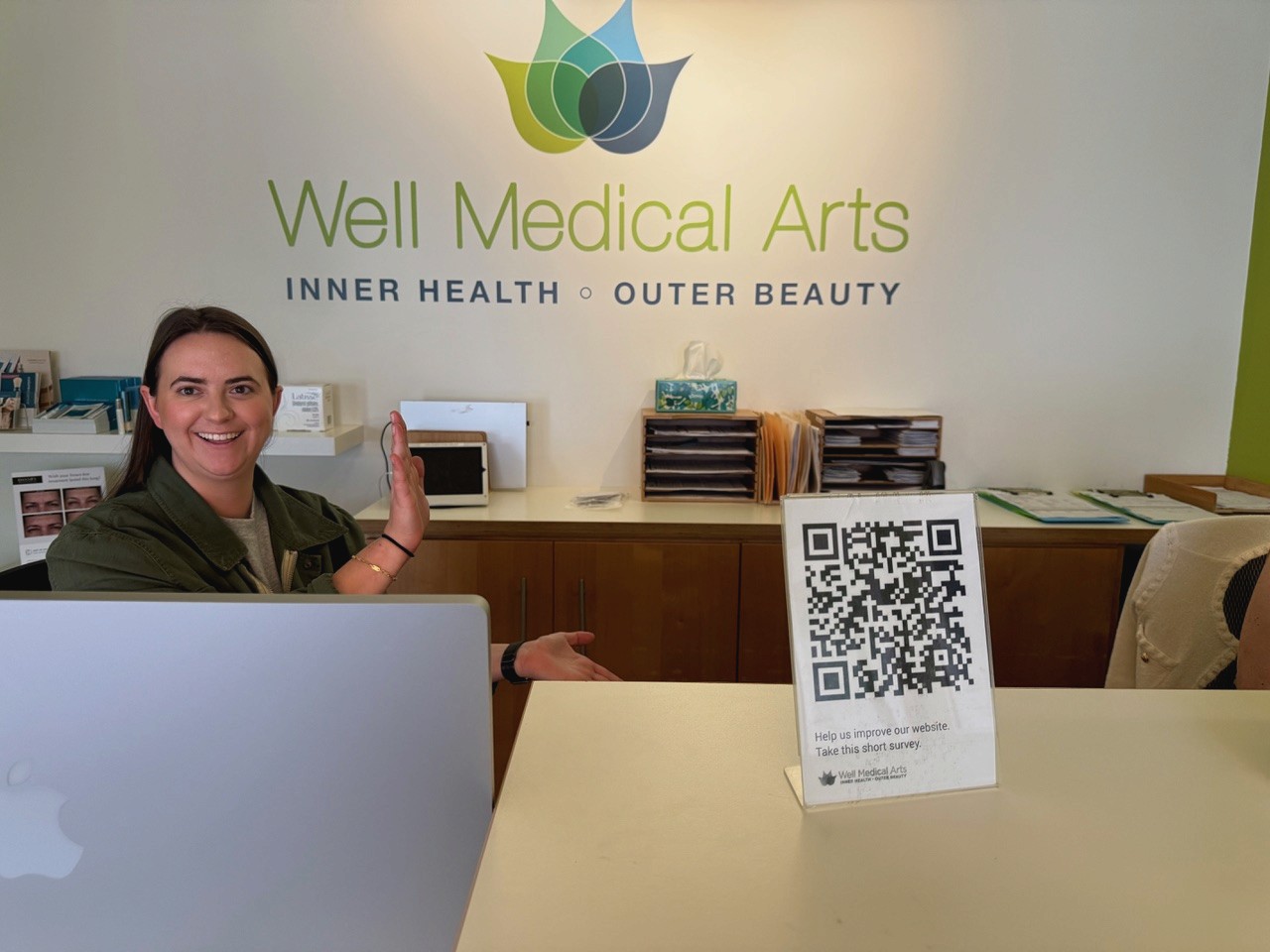
A 10-week research-led redesign of a West Seattle medspa's mobile website — making it easier for first-time patients to discover treatments, understand pricing, and book appointments.
UX Designer · March 20, 2026
Conducted field research to understand painpoints and make driver experience more reliable and trustworthy during large-scale events so Uber can capture more trips when demand is highest.